




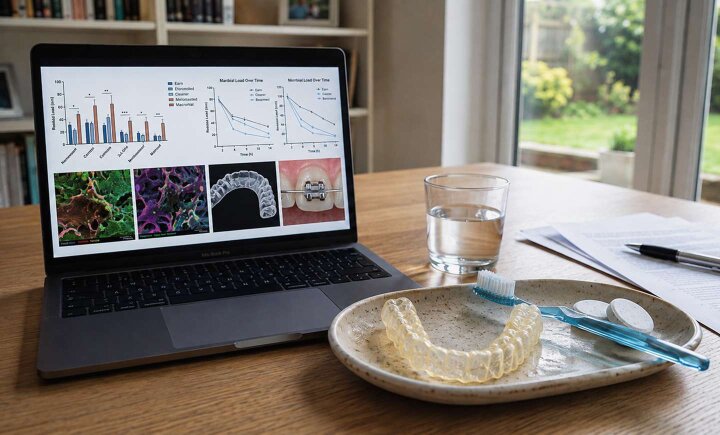
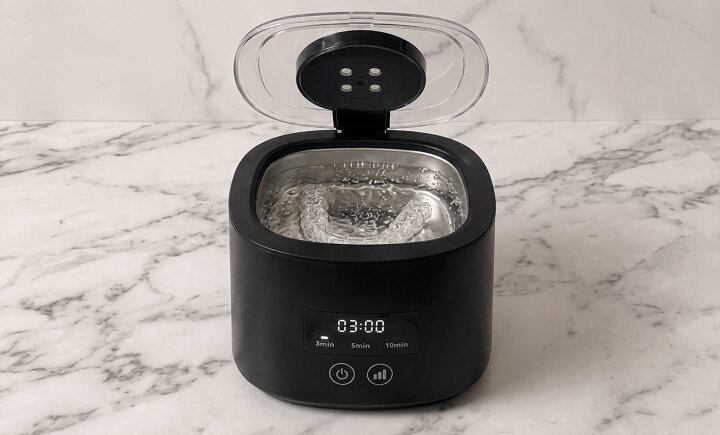
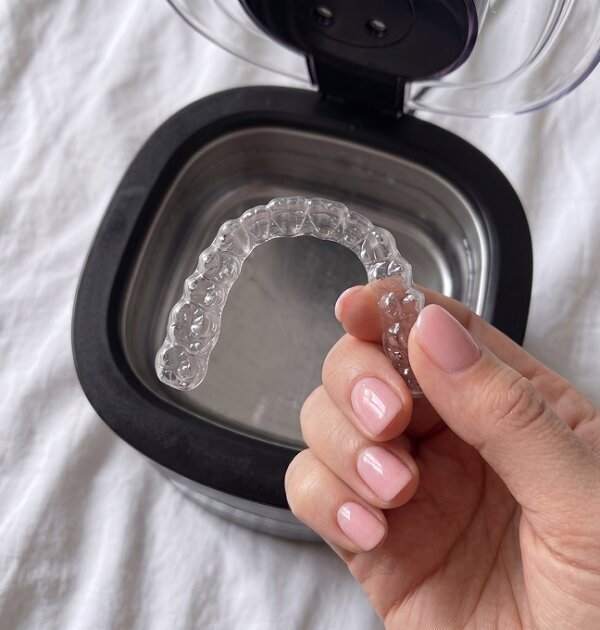
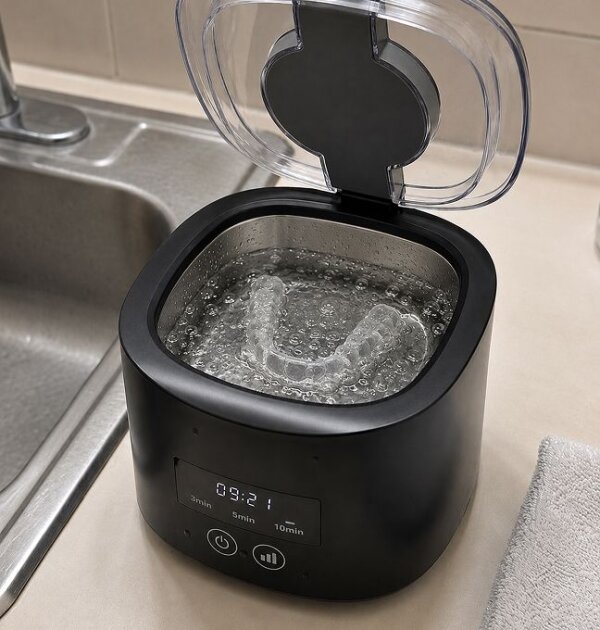
Every night, I stood over the bathroom sink and brushed my retainer until the plastic looked clear. I brushed both sides, rinsed off the toothpaste, and held it under the tap. When I couldn’t face more scrubbing, I dropped it into a glass with a cleaning tablet. If the plastic looked clear and smelled minty, I called it clean. Then one night, I held it beneath the bathroom light and tilted it toward the mirror. A cloudy line sat along the inner ridge where the plastic curved around my teeth. I brushed again, forcing the bristles into the edge from every angle I could manage. The line stayed. When I lifted the retainer toward my mouth, I caught that stale smell again. It was faint, but I hesitated before putting the retainer in. I wore it anyway. In bed, I kept thinking about what I’d done: brushed my teeth, then pressed that retainer against them for hours without knowing what remained inside its fitted grooves. The next morning, I started searching. I expected more advice about brushing. Instead, one figure stopped me: a single milliliter of saliva can carry around 100 million microbes. My retainer looked clean. I still had no idea what remained on the surface pressed against my teeth. Everyone naturally has microbes in their mouth. The problem is that a retainer gives buildup more places to collect – especially in tight grooves and worn areas that are hard to see. That fitted surface would spend hours pressed against my teeth. A retainer gives microbes another place to settle, including the ridges and worn areas that are hard to see under ordinary bathroom light. Over time, microbes can stick to the plastic and form biofilm – that slick layer you may feel along the inside of your retainer. Loose residue may rinse away under running water. And unlike loose residue, that film can cling to the plastic in places your toothbrush struggles to reach. One study found Staphylococcus on 50% of the retainers tested and Candida on 66.7%, showing how much can collect on a retainer even when it looks clean. Clear plastic alone couldn’t tell me what remained on mine. Another study made me question the tablets I had been using. One study even found that three tablet cleaners didn’t reduce bacteria more than brushing alone. So just because the tablet fizzed and left my retainer smelling fresh didn’t mean every bit of buildup was gone. My toothbrush cleaned where the bristles touched, while the soaking glass covered the retainer with liquid. Neither method told me whether the fitted ridge was clean. That search led me to at-home ultrasonic cleaners. Instead of depending on bristles reaching the right angle, they send cleaning action through the surrounding water. That’s when I found DentaSonic. It used 47kHz ultrasonic cleaning, worked with plain water, and had a 3-minute Quick Clean. I could drop my retainer in, press one button, and brush my teeth while it cleaned. That sounded a lot easier than scrubbing the same grooves every night. I ordered one through the official website. When it arrived, I filled the tank with water and placed my retainer inside. For once, I left the cloudy ridge alone. I pressed the button and finished brushing my teeth. Three minutes later, I held the retainer under the same bathroom light. The ridge looked clearer, and I couldn’t feel that same film along the inside curve. I used the Quick Clean again the next night. After a few more cycles, the cloudy line looked even less noticeable. When I opened the case, the same stale smell wasn’t there. A few nights later, I stopped holding the retainer to the light and brushing the same ridge twice before bed. I picked it up and put it in. The cycle took three minutes, and I’d spent most of that time brushing my teeth. A toothbrush cleans only where its bristles touch. DentaSonic sends 47kHz DentaPulse™ action through the water, around the fitted curves and into the narrow grooves the brush misses. The ultrasonic action moves through the water, helping loosen buildup around narrow grooves and fitted edges without direct brushing. The specification sounded technical until I saw what it changed at my sink: Reaches Fitted Grooves. The cleaning action moves through the water and around curved surfaces where a toothbrush head cannot sit flat. Removes 99% of Bacteria and Dirt. The result gave me a stronger cleanliness check than clear plastic or a minty smell. Offers Three Timed Cycles. I use the 3-minute Quick Clean most nights. The 5-minute and 10-minute settings give visible buildup more cleaning time. Runs Cordlessly With Plain Water. The 180ml stainless-steel tank sits beside my retainer case. One USB charge provides up to 150 minutes of cordless use. Several customers described the same routine: start the three-minute cycle, then brush your teeth. I wasn’t the only person who had been brushing the visible surfaces while missing the fitted edges. The three-minute cycle is why DentaSonic stayed beside my sink. As of September 29, 2026* – DentaSonic is listed as in stock on its official website with savings of up to 75% for a limited time.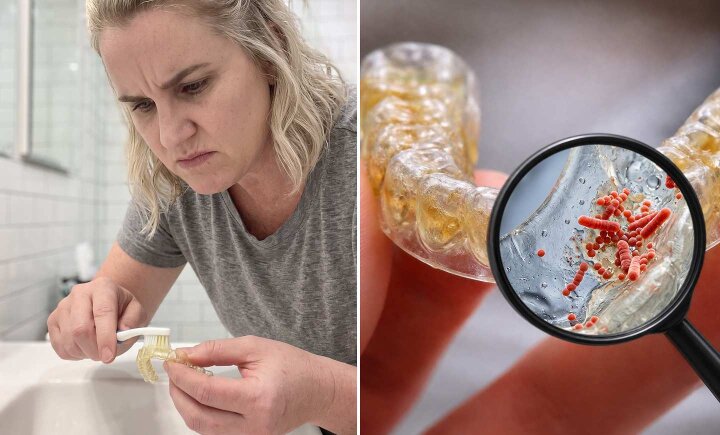
The Part of My Retainer I Was Never Really Cleaning
I Stopped Scrubbing and Tried One 3-Minute Cycle Instead
I went back to the website to learn how water alone had reached the curved edges my toothbrush kept missing.How 47kHz DentaPulse™ Reaches Beyond the Bristles
What Other DentaSonic Customers Said
A Cleaner Retainer in the Time It Takes to Brush Your Teeth
I add water, place my retainer in the tank, and start the cleaner before I brush my teeth. By the time I’m finished, the DentaPulse™ action has moved around the fitted surface my toothbrush couldn’t fully reach.
I stopped buying cleaning tablets and quit scrubbing the same ridge twice before bed.
A single DentaSonic currently costs 69.90 € through the official website.
The four-pack reduces the price to 40.55 € per cleaner with the full 75% bundle discount.
Orders ship worldwide, and every order is covered by a 100% satisfaction guarantee. You can run it against the problem spots on your own retainer and decide from what you see.
If your retainer looks clean until you tilt it toward the light, DentaSonic gives those fitted edges three minutes in the water before they go back in your mouth.
Check DentaSonic Availability and Save Up to 75%




 Like
Like Comment





Customer Ratings
Average based on 9.803 reviews
 Excellent


